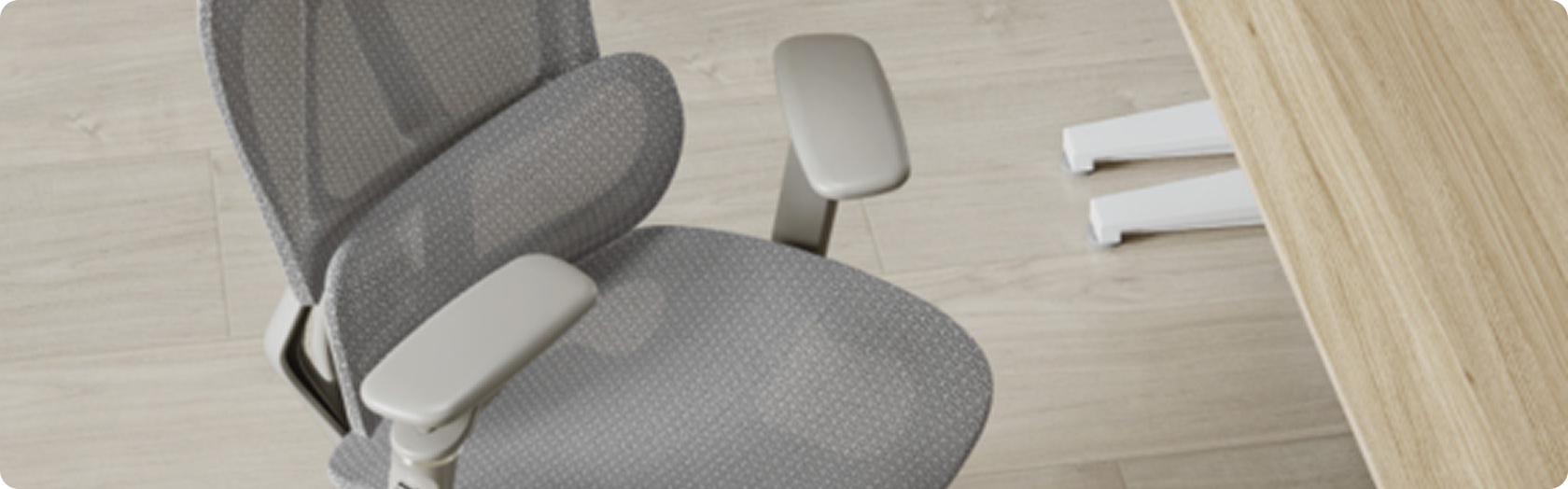
Imagine this scenario: You are the facility manager for a sprawling corporate headquarters. You have just ordered fifty new ergonomic chairs for the marketing department. Six months later, you do a walkthrough, and ten of them are missing. They haven't been stolen; they have simply migrated—one is in the breakroom, two are in the IT department, and a few have vanished into the abyss of storage closets.
This "phantom furniture" phenomenon is a nightmare for large enterprises. Without a solid system, managing thousands of assets becomes a financial black hole. Whether you are procuring wholesale office furniture for a new wing, upgrading your office lobby furniture to impress clients, or investing in luxury office furniture for the C-suite, keeping tabs on these physical assets is critical.
In this comprehensive guide, we will explore the strategies big offices use to track their inventory, prevent loss, and maximize the lifespan of their investments.
The Hidden Cost of "Ghost Assets"
Before we dive into how they track it, we need to understand why. In the world of facility management, a "ghost asset" is property that is recorded in the books but physically missing.
According to a report by the Gartner Group, companies can overpay taxes by as much as 20% because their fixed asset ledgers do not accurately reflect their actual inventory.
When a company buys executive office furniture sets but loses track of them, they are paying insurance and property taxes on items that might not even exist anymore. Furthermore, without tracking, procurement teams might buy new office furniture modern styles when they actually have perfectly good surplus inventory sitting in a basement.

Strategic Standardization: The Power of Wholesale Office Furniture
The first line of defense in tracking is not technology; it is strategy. The most efficient large offices do not buy mismatched items from random retailers. They standardize.
By purchasing wholesale office furniture from a single, reliable manufacturer like Aston Office furniture, companies create a uniform catalog. Instead of tracking "that blue chair from 2019" and "the red chair from 2021," they track "SKU-AST-001."
Standardization simplifies maintenance. If a cylinder breaks on a standard mesh office chair office furniture unit, the maintenance team knows exactly which part to order. They don't need to hunt down the warranty info for five different brands. This is why smart enterprises build relationships with Original Equipment Manufacturers (OEMs) who can guarantee supply continuity for years.

Digital Tracking: From Spreadsheets to Smart Sensors
Gone are the days when a clipboard and a pencil were enough. Today, big offices rely on sophisticated Integrated Workplace Management Systems (IWMS). Here is how they use tech to keep eyes on their small office furniture and large installations.
1. Barcoding and QR Codes
This is the most common method. Every desk, file cabinet, and leather office chair. When an asset is moved from the third floor to the fifth floor, the moving team scans the barcode to update its location in the central database.
- Pros: Cost-effective and easy to implement.
- Cons: Requires manual scanning; prone to human error if movers forget to scan.
2. RFID (Radio Frequency Identification)
For luxury office furniture where the stakes are higher, companies use RFID tags. Unlike barcodes, RFID doesn't require a direct line of sight. A facility manager can walk into a conference room with a handheld reader and instantly "see" every chair and table in the room.
- Pros: Extremely fast audits; high accuracy.
- Cons: Higher implementation cost.
3. IoT Sensors
In the most advanced "smart offices," furniture is connected to the Internet of Things (IoT). Sensors can track not just where a chair is, but if it is being used. This helps companies decide if they need more modern home office furniture sets for remote workers or if they should consolidate space.

Categorizing by Zone: Managing Office Lobby Furniture
Tracking becomes easier when the office is divided into strict zones. The most public-facing zone is the reception area.
Office lobby furniture and office reception furniture are high-traffic, high-visibility assets. Because they define the first impression of the company, they are usually tracked separately from general workstation inventory.
Facilities managers often implement a "fixed asset" policy for lobbies. Unlike a task chair that might roll from one cubicle to another, a heavy reception desk (a key piece of office reception furniture)or a sectional sofa is designated as static. Regular visual audits are performed—often weekly—to ensure these pieces remain pristine. If a piece of office lobby furniture is damaged, it is flagged immediately for repair or replacement to maintain the brand image.

Protecting the Crown Jewels: Luxury Office Furniture
In the executive suites, the furniture is not just functional; it is a capital asset. High-end luxury office furniture, such as solid wood desks or premium leather seating, requires a different level of tracking—often focused on maintenance cycles.
For example, a high-quality furniture office chair leather piece needs regular conditioning to prevent cracking. Advanced asset tracking software will trigger automatic alerts:
- Asset #402 (CEO Leather Chair): Due for leather conditioning on Nov 1st.
- Asset #405 (Boardroom Table): Due for wood polishing on Dec 1st.
This proactive tracking ensures that the most expensive investments, like executive office furniture sets, reach their full lifespan of 10-15 years, rather than being discarded early due to neglect.

The Hybrid Challenge: Tracking Modular Home Office Furniture
The rise of hybrid work has complicated asset tracking. Big offices are now managing inventory that isn't even in the building.
When companies provide modular home office furniture or stipulate allowances for modern home office furniture sets, the "office" perimeter expands to hundreds of employee homes.
To manage this, companies use "Check-in/Check-out" systems similar to library books.
- Selection: The employee selects a mesh office desk chair unit from the company portal (often supplied directly by partners like Aston Office furniture).
- Tagging: The item is shipped with an asset tag linked to that employee's ID.
- Auditing: When the employee leaves the company, the asset list is pulled. The HR exit process includes a retrieval step for the small office furniture or tech equipment residing at their home.
Comparison: Choosing the Right Tracking Method
How do facility managers decide which method to use? Here is a breakdown of the common tracking technologies.
| Feature | Manual Spreadsheets | Barcode / QR Code | Passive RFID | Active IoT Sensors |
| Cost | Low (Time expensive) | Low / Medium | Medium | High |
| Accuracy | Low (Human error) | High | Very High | Real-time |
| Best For | Small startups | Wholesale office furniture (Bulk) | Luxury office furniture | High-security areas |
| Labor Needed | High | Medium | Low | Very Low |
| Real-Time Data | No | No | No | Yes |
The Lifecycle Approach to Inventory
Tracking isn't just about knowing where it is; it is about knowing how old it is.
Effective tracking logs the purchase date. This helps in forecasting. If you know you bought 500 chairs in 2018, and their useful life is 7 years, your software can predict a massive capital expenditure need for office furniture modern replacements in 2025.
This data-driven approach allows procurement teams to negotiate better deals on wholesale office furniture by planning bulk orders years in advance, rather than panic-buying at retail prices when things break.
Conclusion
So, how do big offices keep track of furniture? They stop treating furniture as "static background objects" and start treating them as data points. By combining strategic procurement of wholesale office furniture, utilizing digital tagging technologies for office lobby furniture, and implementing strict maintenance schedules for luxury office furniture, large enterprises save millions in lost assets and unnecessary tax payments.
Whether you are managing a single floor or a global campus, the principles remain the same: Standardize your procurement with trusted partners like Aston Office furniture, digitize your inventory, and audit regularly.
Ready to streamline your office assets? Browse our catalog for trackable, high-quality solutions: wholesale office furniture.
FAQ
Q1: Why is tracking wholesale office furniture important for tax purposes?
A: Wholesale office furniture is a capital asset that depreciates over time. Accurate tracking allows a company to claim depreciation deductions correctly. Conversely, if you are still paying property tax on office lobby furniture that you threw away two years ago because you didn't update your records, you are throwing money away.
Q2: How often should we audit our luxury office furniture inventory?
A: For high-value luxury office furniture, a physical audit should be conducted at least annually. However, digital audits using RFID can be done quarterly or even monthly to ensure these expensive assets haven't been moved to unauthorized areas.
Q3: Can we track office furniture modern styles that are used in employee homes?
A: Yes. For modular home office furniture, companies typically use an assignment system. The asset is "checked out" to the employee. Best practices involve an annual digital "check-in" where the employee uploads a photo of the asset to verify its condition and presence.
Q4: What is the best way to tag fabric office reception furniture?
A: Tagging fabric or soft office reception furniture can be tricky as stickers fall off. The industry standard is to attach the tag to the rigid frame underneath the seat or to sew a label into the seam of the cushion during manufacturing.
Q5: Does Aston Office furniture provide asset tagging services?
A: As a leading OEM manufacturer, Aston Office furniture can work with large corporate clients to apply asset tags or barcoded labels during the manufacturing process, ensuring your wholesale office furniture arrives pre-tracked and ready for your system.
Q6: What happens to old executive office furniture sets when we upgrade?
A: When upgrading executive office furniture sets, tracking helps decide the disposal route. If records show the furniture is fully depreciated but in good condition, it can be donated for a tax write-off or sold to liquidators. If it is at the end of its life, it is sent for recycling. Tracking ensures a sustainable disposal process.