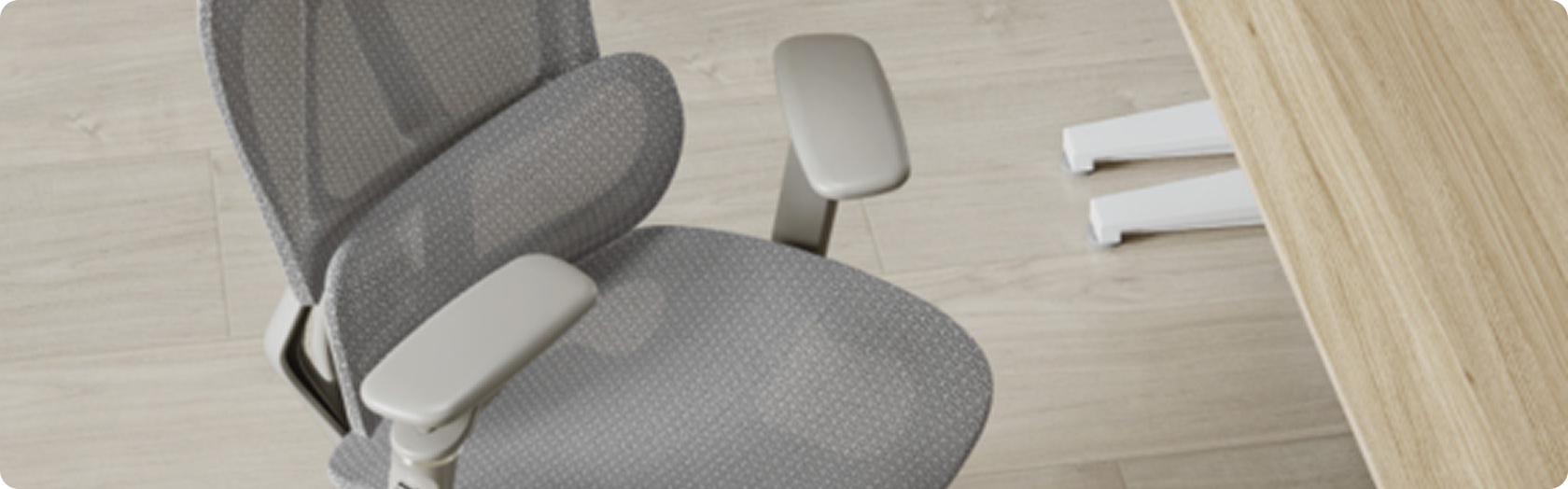
How an office chair works: In-depth ergonomics
The modern executive office chair is a polymer of ergonomics and mechanical design that is far more complex than a simple seat on wheels. Understanding how office chairs work is critical to selecting the right support for your team, and it will also allow you to understand the engineering design behind an ergonomical office chair with footrest. This guide will deconstruct the office chair and explain the functions of each component-from the pneumatic lift bar that adjusts height to the synchronized tilt mechanism that determines movement. We will explore how these components can be integrated into a system designed to promote health, productivity and durability, and why purchasing chairs from professional office chair manufacturers (link to About Us) is critical to long-term performance.

Foundation of support: cushion and cushioning mechanics
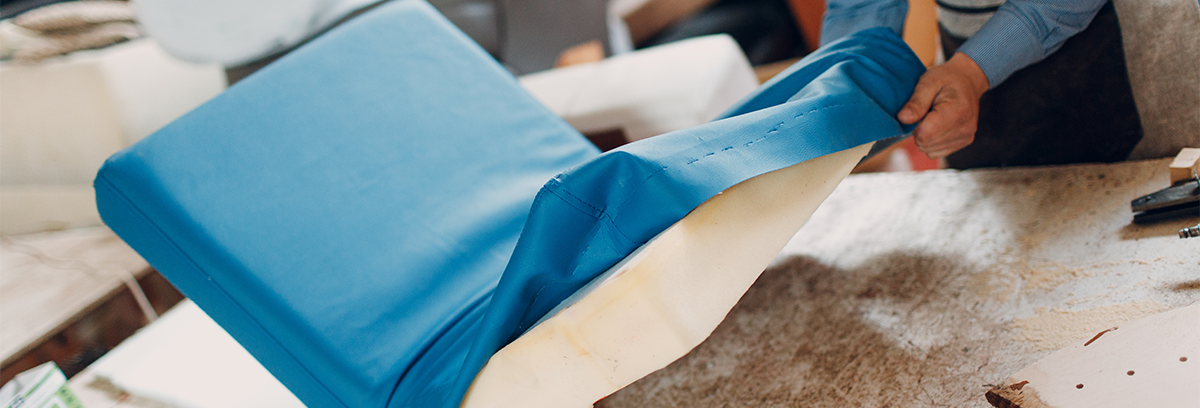
The seat is the main point of contact, and its design is critical for pressure distribution and blood flow. A best office chair seat cushion uses a combination of highly resilient foam covered on a supporting substrate. The density of the foam (usually measured in kg/m³) determines its service life and resistance to permanent deformation. The front edge of the seat cushion usually has a waterfall design that curves downward to reduce pressure on the underside of the thighs and improve blood circulation. In the mesh office chair (link to the mesh office chair collection page), seat cushions may feature flexible elastic mesh suspended from the frame to provide different types of pressure distribution and enhanced breathability. The seat cushion pan itself is usually connected to the chair mechanism or seat pan, forming a central hub from which all other adjustment functions radiate.
Core of comfort: backrest and lumbar support system
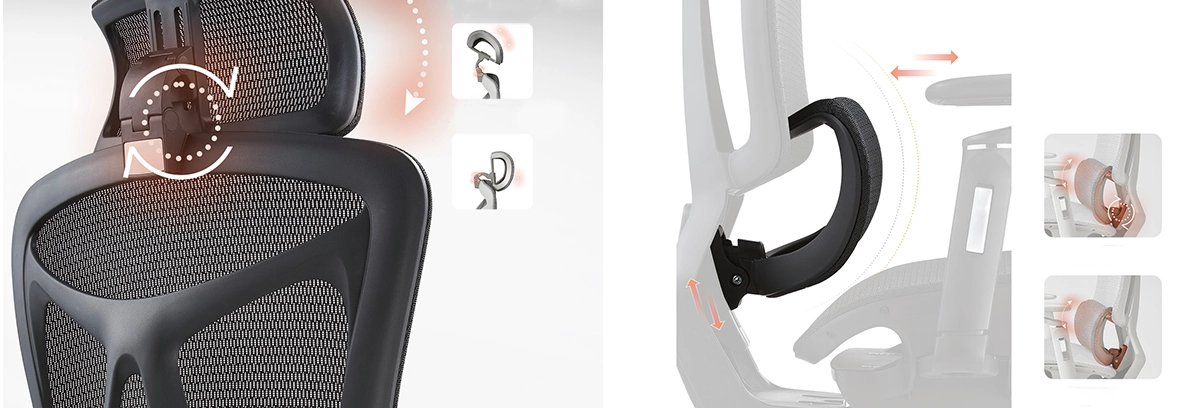
The backrest is used to counteract the effect of gravity on the spine. Its core function is to provide dynamic lumbar support-that is, to maintain the internal curvature of the spine's natural "S" curve. In the base chair, this is a static cushion. In a true ergonomical mesh desk chair, this is an adjustable system that includes a height-adjustable lumbar support (which can move up and down), an adjustable depth-adjustable support pad (which can protrude forward and backward), or a flexible tension-adjustable mesh backrest that automatically fits the body. The backrest is connected to the seat cushion through a reclining mechanism. This is the core principle of the mesh ergonomical desk chair design.

The core of adjustment: pneumatic lift lever and height control mechanism
The most easily recognizable function is height adjustment, driven by a pneumatic lift bar. Its working principle is as follows: the cylinder contains pressurized nitrogen and a small amount of hydraulic oil. When the user clicks the joystick, the valve opens, the gas is compressed, and the piston slides into the cylinder, lowering the chair. Releasing the lever closes the valve, and gas pressure locks the piston at the required height to support the user's weight. Quality is crucial; Class 3 or 4 air rods are suitable for higher life cycles and load bearing capacity. This component is the key to distinguishing a reliable office chair from a cheap office chair, and the failure of the pneumatic lift lever is also the main reason for replacing the chair.
Dynamics of motion: tilt, tension and locking mechanisms
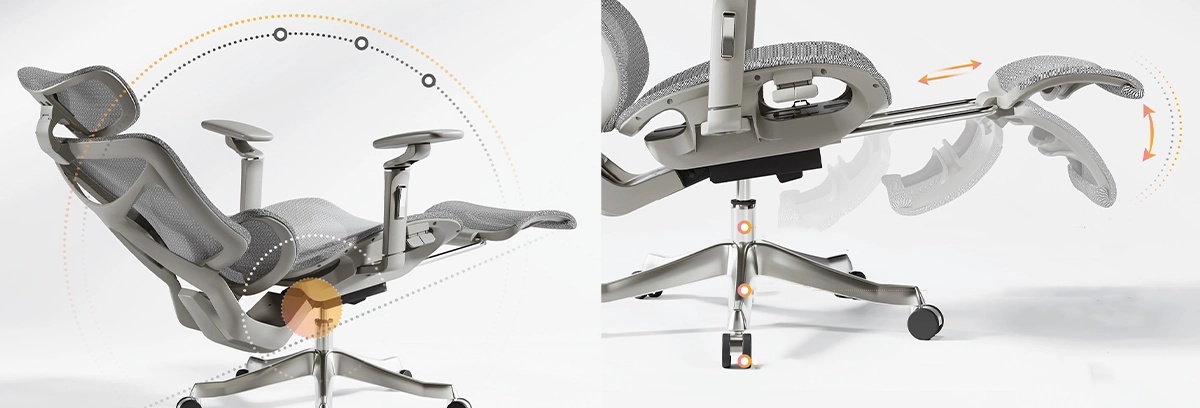
This system controls how the chair moves with the user. The most common type is a synchronous reclining mechanism, which connects the seat cushion and backrest to recline back in a synchronized ratio (e.g. 2:1, which means that the backrest reclines back 2 degrees and the seat cushion reclines 1 degree). This maintains the user's vision level and keeps his feet on the ground. The chair is equipped with a tilt tension knob that allows users to adjust the resistance to recline to suit their weight. The tilt lock feature typically locks the mechanism in an upright or reclined position. The more advanced ergonomical desk chair with footrest provides multi-directional tilting (seat cushion sliding, knee tilting) for more natural movements. The smooth operation of the system defines the "feel" of the chair and is crucial for dynamic sitting and comfort.

Interaction points: handrails, casters and five-star feet
These components connect the user, the chair and the environment.
· Handrails: Modern 4D adjustable handrails can move up and down (height), inside and out (width), rotate angle, and slide back and forth. They provide support to reduce shoulder and neck strain.
· Castors: Wheels. Two-wheel casters with soft polyurethane (PU) treads are standard on hard floors, providing smooth rolling and floor protection. Carpet castors have different wheel designs. Its smooth sliding is critical for mobility in Modular office furniture (linked to catalog) settings.
· Five-star foot: Usually made of reinforced nylon or aluminum, provides stability. The number of five casters provides the best balance of support and mobility. The heavy base is crucial for large size office chairs to prevent tipping over.
System integration: Ergonomic chair as a complete unit
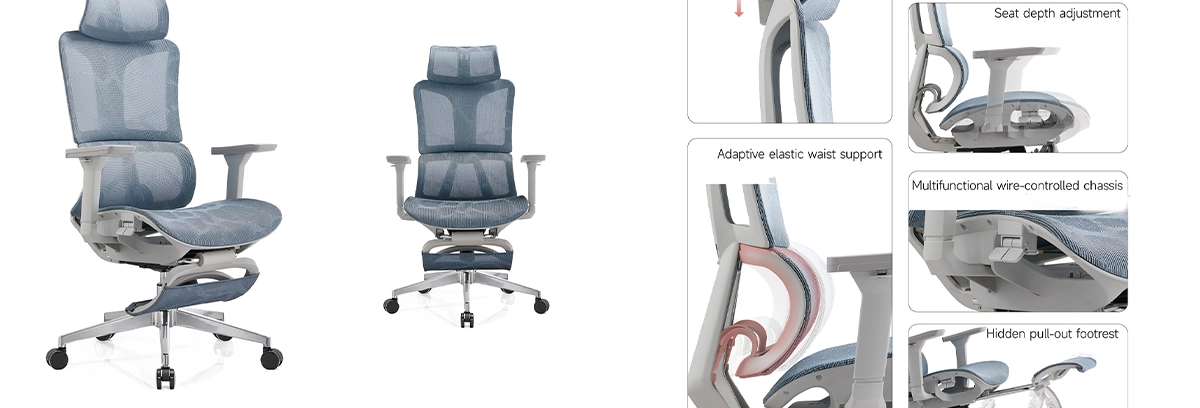
A mesh ergonomical desk chair is not just the sum of its functional parts; it is a system that works together. When the cushion depth is set correctly, the adjustable lumbar support is aligned with the spine. When the air bar is correctly aligned to the height of the table, the chair height places the thighs parallel to the ground. The height of the armrest should allow the shoulders to relax. All these adjustment functions must work together and be guided by clear controls. This overall design concept distinguishes true ergonomic seat solutions from basic chairs. That's where the value of the OEM/ODM customization services provided by manufacturers like Aston-allowing companies to customize the system based on their specific user groups and corporate office furniture standards (e.g., seat cushion width, armrest type, fabric).
Conclusion: Choose a chair that can work for a long time
Understanding how office chairs work allows you to make clear purchasing plans. Aston(link to About Us) insists on integrating ergonomics into new design appearances, while the chairs we produce have solid bodies,